

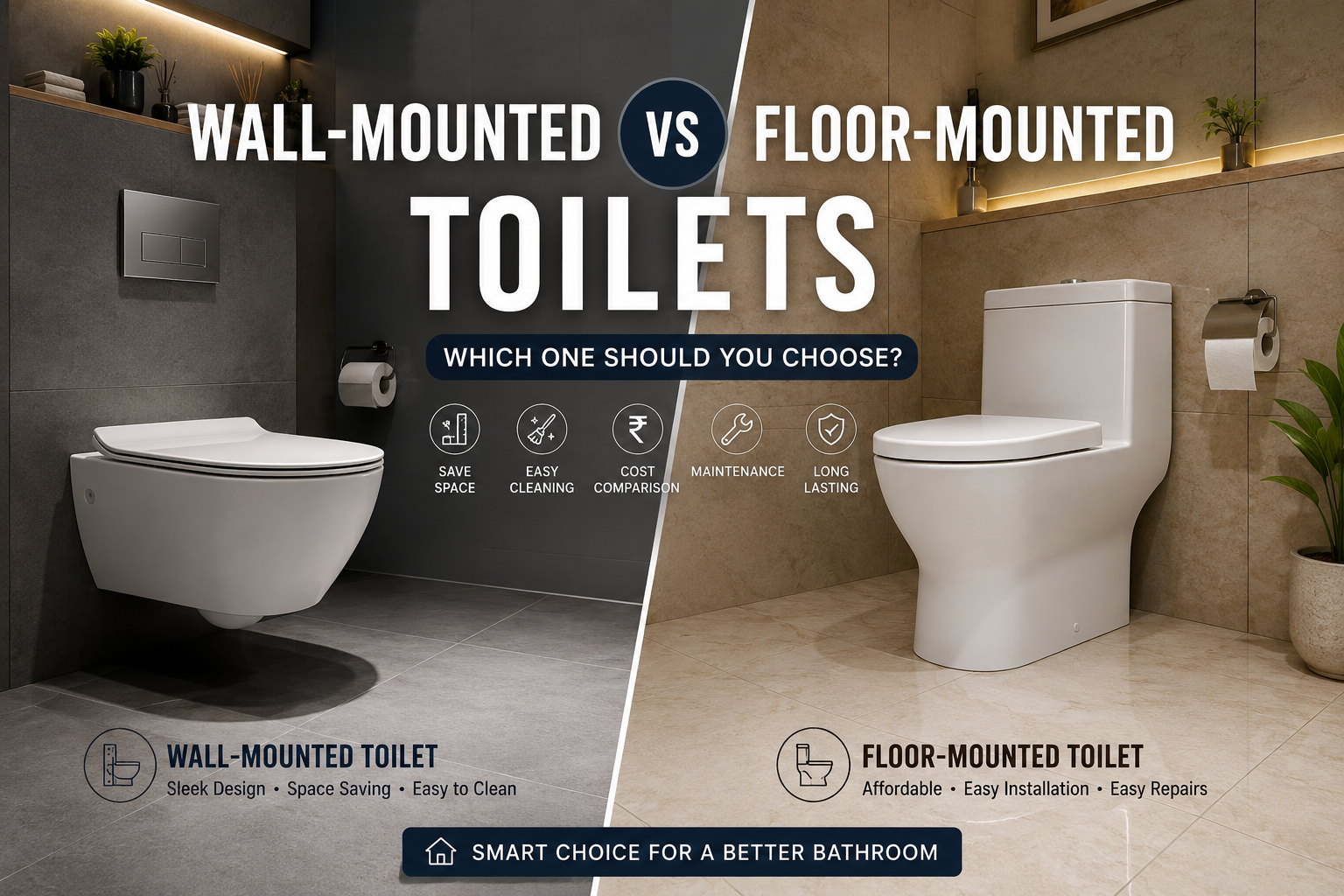
Wall-Mounted vs Floor-Mounted Toilets: Which One Should You Choose?
When comparing a wall-mounted vs floor-mounted toilet, the best choice depends heavily on your bathroom size, your renovation budget, and the plumbing structure of your Indian home. Wall-mounted toilets save valuable floor space and offer a premium, modern look by hiding the plumbing behind the wall, making them incredibly easy to clean. Meanwhile, floor-mounted toilets (or standard EWCs) are much more affordable, easier to install in traditional RCC slab homes, and simpler to repair without breaking any bathroom tiles.
Choosing the right western commode is one of the most important decisions you will make during a bathroom renovation. Many homeowners in India make the mistake of picking a stylish fixture based purely on aesthetics, only to find out later that their home’s S-trap plumbing doesn’t support it, or that future repairs will require breaking costly tiles.
That is exactly why this comparison is so important. A toilet is a long-term investment that you will use every single day. Understanding the mechanics, Indian pricing in INR, and the maintenance needs of each style will save you time, money, and frustration down the road.
In this comprehensive toilet buying guide, you will learn exactly how these two popular commode styles stack up against each other. We will break down their hidden costs, space requirements, and daily comfort levels so you can confidently choose the best toilet for your bathroom remodel.
What is a Wall-Mounted Toilet?
A wall-mounted toilet (often called a wall-hung commode) is a modern fixture where the ceramic toilet bowl is securely attached directly to the bathroom wall, leaving clear floor space underneath.
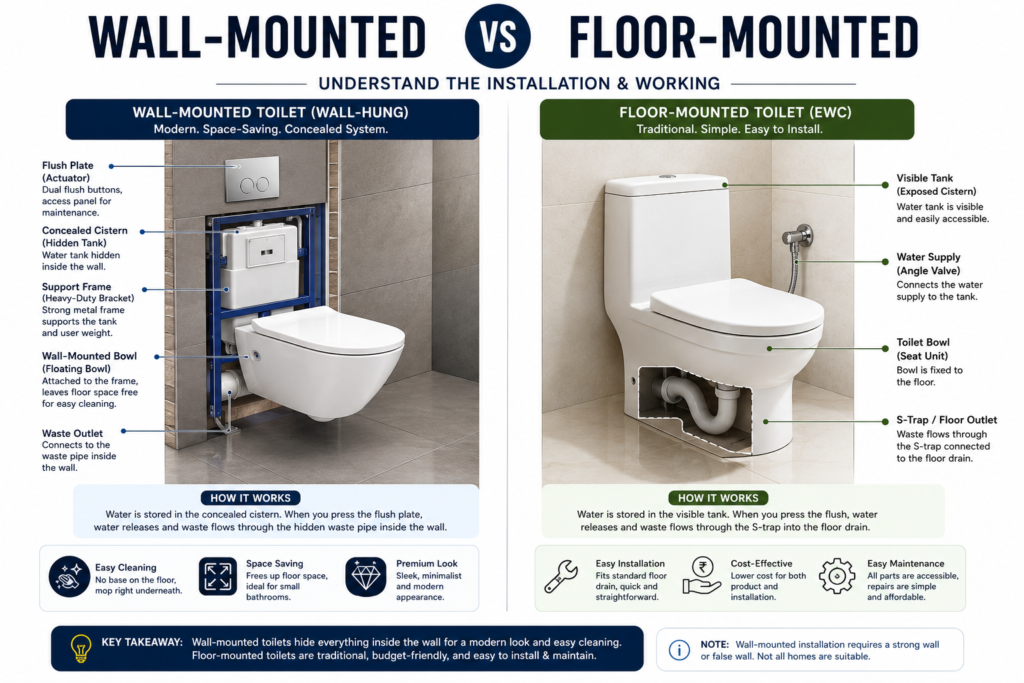
Unlike traditional designs, the water tank (concealed cistern) and all the plumbing are completely hidden behind the wall or inside a false ledge. The only visible parts in your bathroom are the floating bowl and the flush push-button plate on the wall.
How It Works and Components:
- Concealed Cistern: A slim plastic water tank hidden within the wall (popular brands include Jaquar and Geberit).
- Chair Bracket / Frame: A heavy-duty iron frame installed behind the tiles to support the tank and the weight of the user.
- Actuator Plate: The flush buttons located on the wall, which also act as a service panel for future repairs.
- Floating Bowl: The ceramic seating unit attached to the wall.
Best Use Cases:
- Compact urban apartments where every inch of bathroom space counts.
- Ultra-modern, luxury bathroom designs in villas.
- Bathrooms going for a minimalist, clutter-free look.
Benefits:
- Easy Cleaning: Because it doesn’t touch the floor, you can easily sweep and mop directly underneath it. No more dirt accumulation at the base.
- Space Saving: It frees up functional floor space, making small Indian bathrooms feel larger.
- Premium Look: It instantly upgrades the aesthetics of the bathroom.
Limitations:
- Installation requires creating a half-wall or chasing into the brick wall, which means breaking existing tiles.
- Both the commode and the labor cost significantly more.
What is a Floor-Mounted Toilet?
A floor-mounted toilet (commonly known as a European Water Closet or EWC) is the classic fixture found in the majority of Indian homes. As the name suggests, the toilet bowl is bolted firmly to the floor, and the waste usually exits through a drain pipe in the floor (S-trap).
Types of Floor-Mounted Toilets:
- Two-Piece: The bowl and the water tank are separate pieces bolted together. This is the most traditional and affordable type.
- One-Piece Commode: The tank and bowl are fused into a single, seamless ceramic unit. These are currently very popular in India as they look sleek and are easier to clean than two-piece models.
Installation and Mechanics:
Floor-mounted toilets are straightforward. They sit over a floor drain, sealed with cement or a wax ring to prevent leaks, and are secured with floor bolts. The water supply line (angle valve) connects directly to the visible tank.
Advantages:
- Cost-Effective: They are significantly cheaper to purchase and install compared to wall-hung units.
- Easy Repairs: Plumbers can easily access the tank and valves without opening up any walls or breaking tiles.
- S-Trap Compatibility: Most Indian homes are built with floor drains (S-trap). Floor-mounted toilets are designed to fit perfectly into this existing setup.
Limitations:
- They take up more physical space in the bathroom.
- Hard water stains, dust, and grime tend to build up around the floor base, making daily cleaning tedious.
Wall-Mounted vs Floor-Mounted Toilets: Pros and Cons
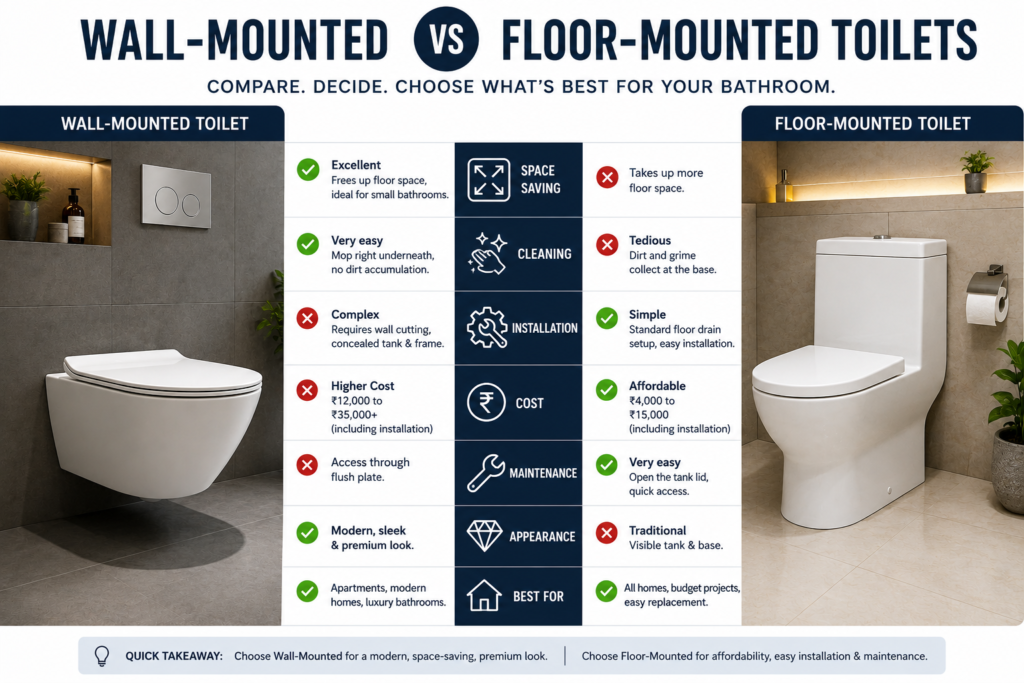
To help you make an informed decision for your Indian home, here is a direct comparison of the key differences between a wall-mounted vs floor-mounted toilet.
| Feature | Wall-Mounted Toilet | Floor-Mounted Toilet |
| Appearance | Sleek, minimalist, and floating | Traditional, visible tank and base |
| Space Saving | Excellent; frees up floor space | Poor; takes up maximum floor space |
| Installation | Complex; requires breaking walls/tiles | Simple; standard floor drain setup |
| Cost | High (₹12,000 to ₹35,000+) | Low to Moderate (₹4,000 to ₹15,000) |
| Cleaning | Very easy; mop right underneath | Tedious; grime collects at the base |
| Maintenance | Access through the flush plate | Very easy; open the tank lid |
| Durability | High; heavy-duty metal bracket | High; rests solidly on the floor |
| Water Efficiency | Excellent; mostly dual-flush | Excellent; high-efficiency models available |
| Comfort | Highly customizable height | Standard preset heights |
| Accessibility | Great; adaptable for wheelchairs | Good; requires buying specific heights |
| Repairs | Requires specialist plumbers | Any local plumber can fix it |
| Lifespan | 15–20+ years | 15–30+ years (ceramic lasts forever) |
| Best for Apartments | Great if plumbing allows, saves space | Standard choice, easy to replace |
| Best for Villas | Top choice for premium aesthetic | Great for secondary traditional baths |
| Best for Luxury Homes | Excellent for master bathrooms | Good, especially smart one-piece models |
Wall-Mounted vs Floor-Mounted Toilet Cost Comparison
When planning your renovation budget, the cost difference is substantial. A good quality floor-mounted one-piece toilet from brands like Hindware, Cera, or Parryware typically costs between ₹6,000 and ₹12,000. Basic installation by a local plumber runs about ₹1,000 to ₹2,000.
In contrast, a wall-mounted setup is split into parts: the ceramic bowl (₹6,000–₹15,000), the concealed cistern and metal frame (₹5,000–₹10,000), and the flush push plate (₹1,500–₹3,000). Total material costs easily exceed ₹15,000 to ₹25,000. Because a mason and plumber must work together to build a false wall or chip into bricks and move pipes, installation labor and material can add another ₹4,000 to ₹8,000+.
Expert Tips to Choose Between the Two Toilets
Choosing the right wall-mounted vs floor-mounted WC requires looking beyond just the catalog pictures. Here are a few expert recommendations based on typical Indian home construction:
- Consider Your Bathroom Size: If you are renovating a compact 4×6 feet bathroom, the inches saved by a wall-mounted toilet can make the room feel much more open and less cramped.
- Evaluate Your Plumbing Trap (S-Trap vs P-Trap): Indian apartments are usually built with RCC slabs and floor drains (S-Trap). Installing a wall-hung toilet (which requires a P-Trap wall drain) means you have to create a raised step or a false ledge wall to hide the new pipes. If you don’t want to reduce room size with a ledge, stick to a floor-mounted model.
- Think About Elderly Users: Wall-mounted toilets can be fantastic for senior citizens because your contractor can set the commode at a slightly higher, customized height before fixing the tiles, making it easier to stand up.
- Factor in Long-Term Maintenance: If you live in an area where it is hard to find specialized plumbers, a one-piece floor-mounted toilet will save you headaches. Any local plumber can fix a standard floor toilet.
- Rental Properties: For rental flats, durability and low repair costs are key. Always choose a floor-mounted toilet for rentals to avoid expensive concealed plumbing emergencies caused by tenants.
Final Thoughts
There is no single “perfect” choice when looking for the best toilet for bathroom renovations in India.
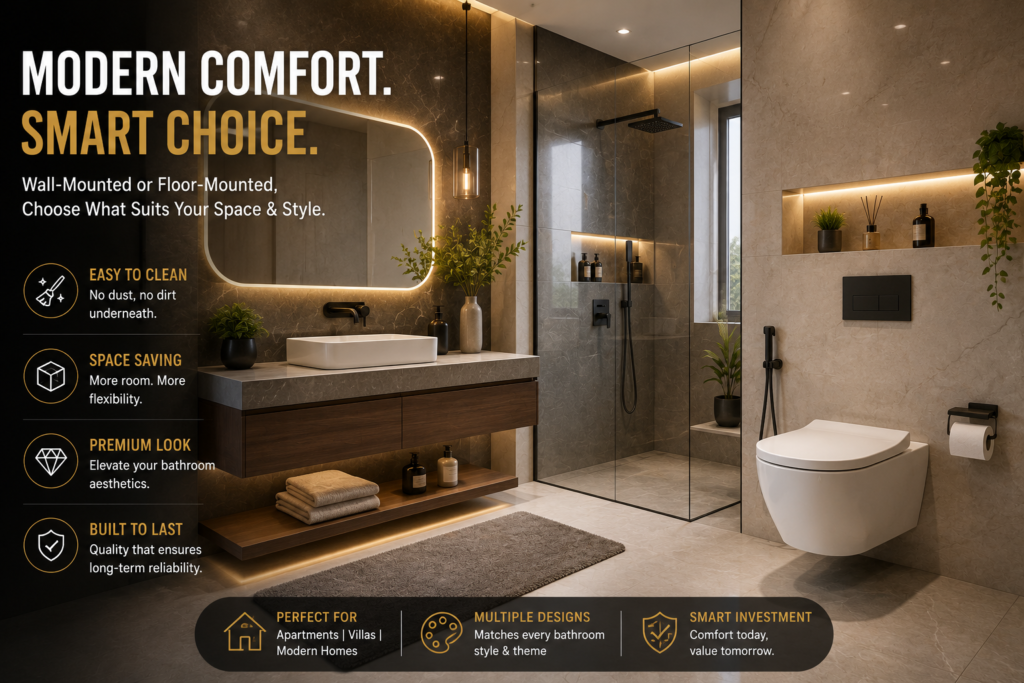
If you have the budget, are completely replacing the bathroom tiles, and crave a high-end, modern aesthetic that makes daily mopping a breeze, a wall-mounted toilet is a spectacular upgrade.
However, if you are doing a quick budget update, prefer the peace of mind that comes with easily accessible plumbing, or want a straightforward replacement without breaking walls, a high-quality floor-mounted one-piece toilet remains an unbeatable and reliable classic.
Frequently Asked Questions (FAQs)
Which toilet lasts longer?
Both toilets have a similar lifespan regarding the ceramic bowl. However, the internal tank parts of a floor-mounted toilet are much easier and cheaper to replace over time. The concealed cisterns of wall units are durable, but fixing internal leaks can be slightly trickier.
Which is easier to clean?
A wall-mounted commode is significantly easier to clean. Because it floats above the floor, there is no bulky base where hard water stains, dust, and dirty water can accumulate. You can easily sweep and mop directly beneath it.
Which costs more?
A wall-mounted toilet costs significantly more in India. You have to purchase the bowl, the concealed cistern, the metal chair bracket, and the flush plate separately. Additionally, the labor and masonry work to hide the pipes behind the tiles make installation expensive.
Which is better for small bathrooms?
Wall-mounted toilets are visually better for small bathrooms. By hiding the water tank behind the wall, you make the room feel larger and less cluttered. However, ensure you don’t lose too much space building the false wall for the tank.
Are wall-mounted toilets strong?
Yes, they are incredibly strong. When properly installed by an experienced plumber, the heavy-duty iron chair bracket inside the wall is designed to support 200 kg to 400 kg without damaging the tiles or the ceramic bowl.
Can wall-mounted toilets leak?
Any toilet can leak, but concealed cisterns are made of seamless plastic tanks that are highly resistant to cracking. If a leak happens at the valve, your plumber can access and fix the internal parts directly through the removable flush button plate without breaking tiles.
Which toilet increases home value?
Wall-mounted toilets are generally associated with luxury villas and premium modern flats. Installing one gives your bathroom a high-end, hotel-like feel, which can appeal to buyers looking for a sleek, move-in-ready home.
Which toilet is easier to install?
A floor-mounted toilet is much easier to install. It simply bolts directly into the existing floor drain (S-trap) and connects to an exposed angle valve. Wall-mounted units require masonry work, pipe rerouting, and specialized tile cutting.
Conclusion
Deciding between a wall-mounted vs floor-mounted toilet ultimately comes down to balancing your design desires with your renovation budget and the structural reality of your Indian home. If you want a minimalist, easy-to-clean space and don’t mind the upfront investment and masonry work, a wall-mounted fixture is a stunning choice. On the other hand, if you want reliability, easy maintenance, and a budget-friendly installation, the modern one-piece floor-mounted toilet will never let you down.
No matter which style you choose, professional installation by a skilled plumber is crucial to ensure your bathroom remains leak-free and functions perfectly for years to come.
Ready to transform your bathroom? Contact our expert design and plumbing team today for a personalized consultation. We can help you evaluate your current plumbing, select the perfect commode from top brands, and handle the installation from start to finish!