

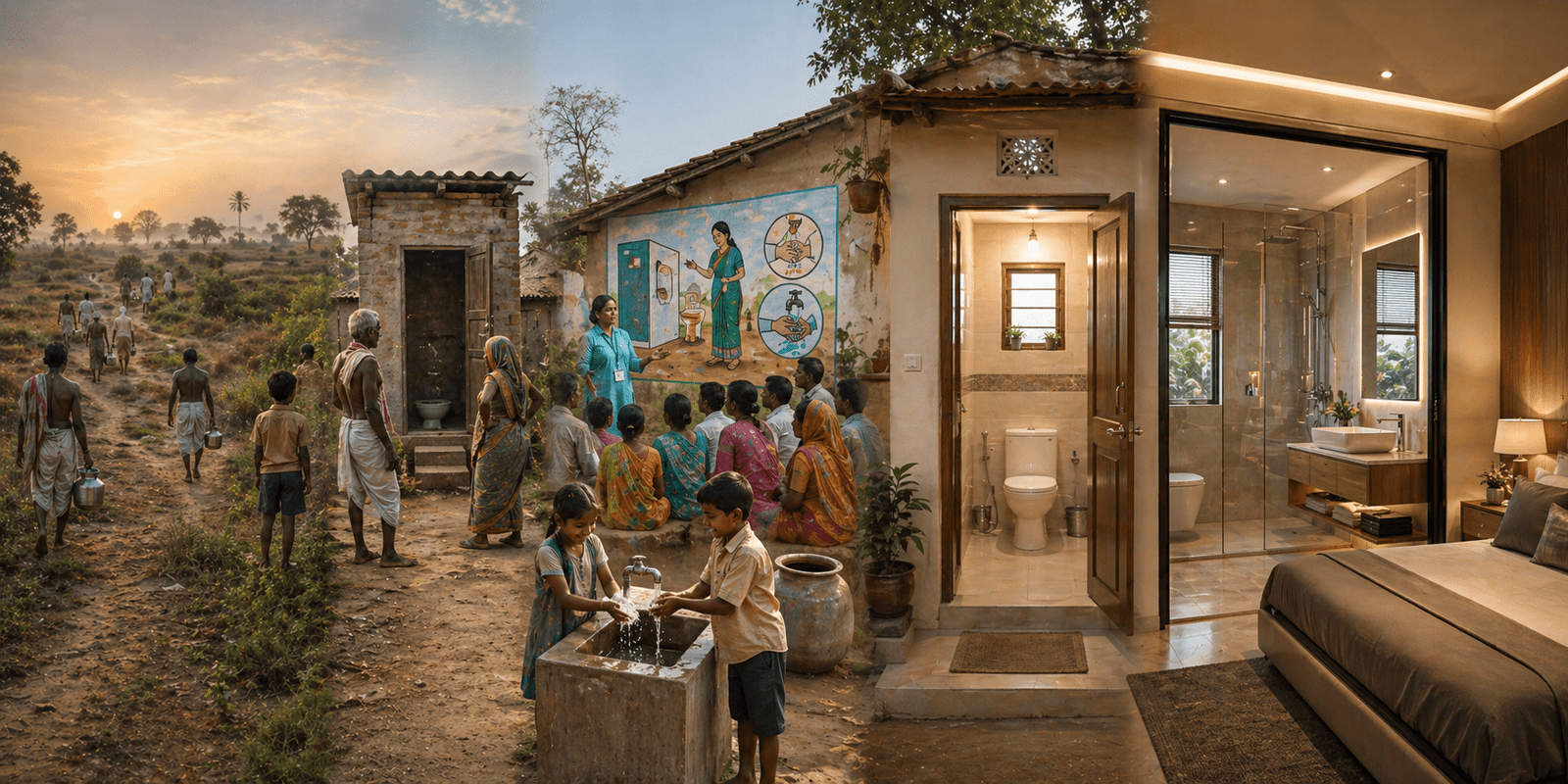
FROM VILLAGE OUTSKIRTS TO INSIDE BEDROOM: BATHROOM EVOLUTION IN INDIA
Introduction – A Quiet Revolution That Changed How India Lives
India did not transform its bathrooms overnight. The shift came slowly, almost invisibly, moving through generations, habits, and mindsets. What began as a necessity managed in open spaces has now become a defining element of modern living inside the home. The journey of the bathroom in India is not just about construction or design; it reflects dignity, privacy, and the evolution of lifestyle itself. From the outskirts of villages to the intimacy of bedroom interiors, this transformation tells a powerful story of progress.
Global institutions like World Health Organization emphasize that sanitation is foundational to public health, reinforcing how deeply this transformation impacts everyday life.
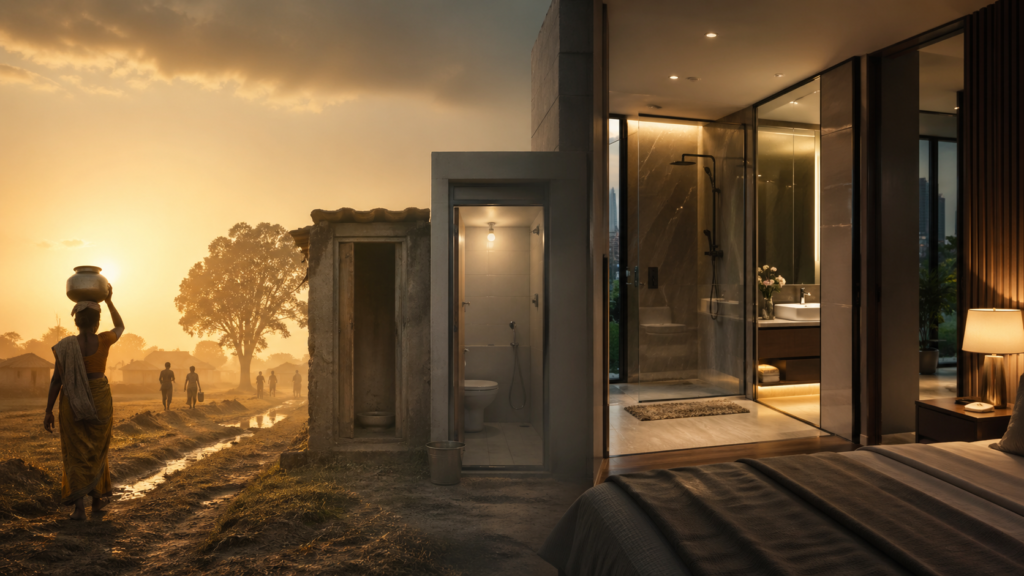
For decades, sanitation remained a challenge, especially in rural areas. However, with growing awareness and initiatives like the Swachh Bharat Mission, the bathroom evolution in India accelerated rapidly. The focus expanded beyond just building toilets to changing behavior, encouraging people to adopt cleaner and healthier practices.
Phase One – Life Beyond the Walls
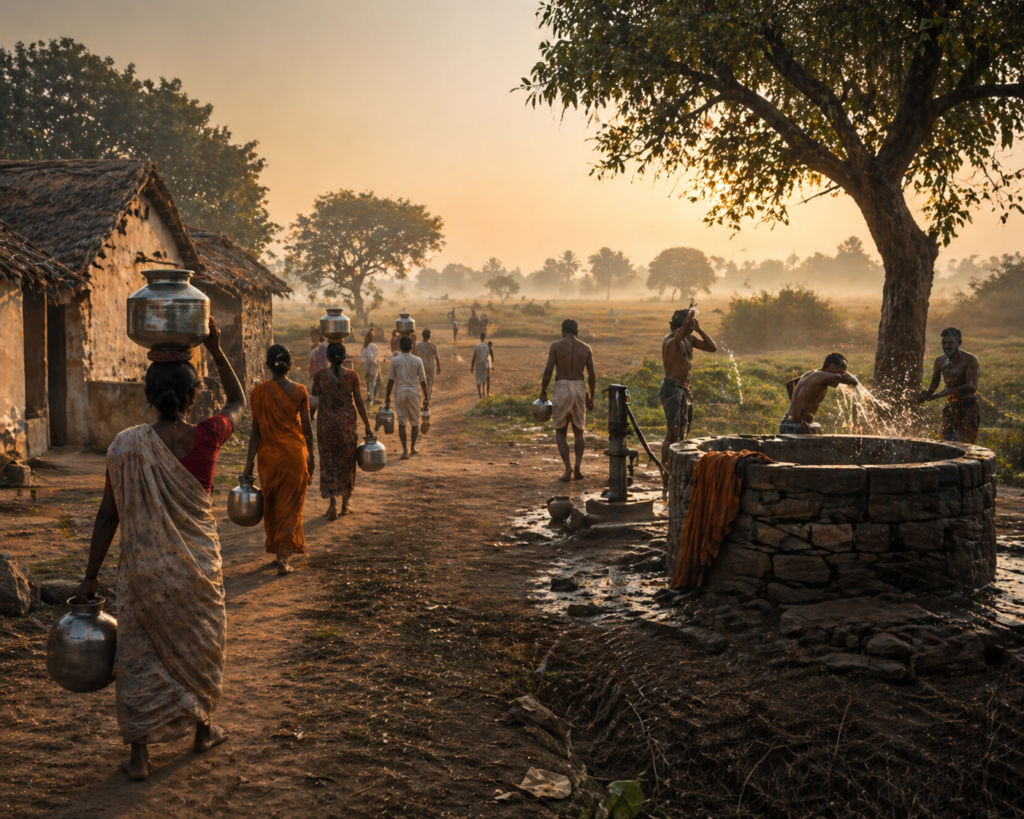
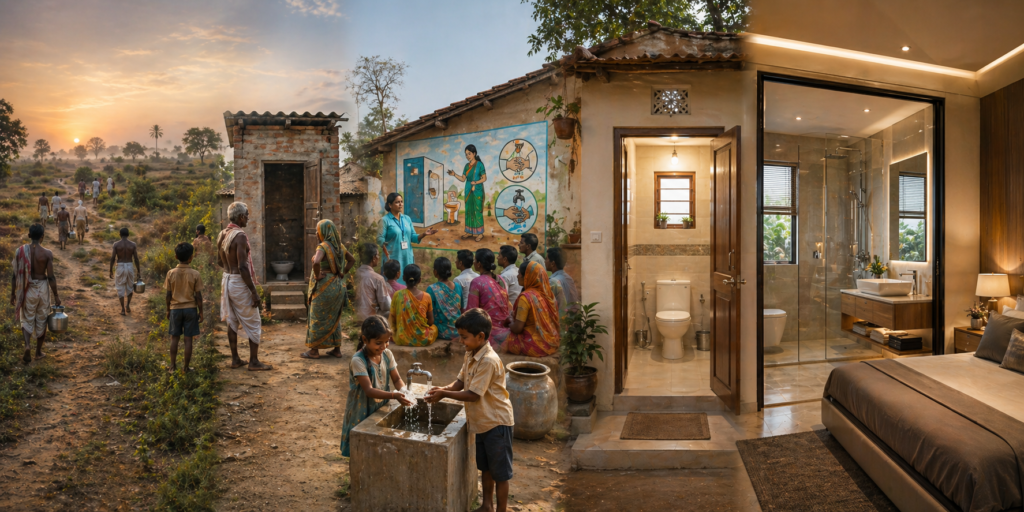
There was a time when the idea of a bathroom inside the house felt unnecessary. In rural India, daily routines were aligned with nature. People walked to open fields at dawn or dusk, carrying with them habits shaped by generations. Bathing happened near wells, rivers, or hand pumps, where water was accessible but privacy was not guaranteed.
This was not a failure of awareness but a reflection of available resources. Land was abundant, water access was limited, and homes were built with a focus on shelter rather than sanitation. Hygiene existed, but it lived outside structured systems. The bathroom, as we understand it today, had no defined place within the home.
Phase Two – The First Structural Shift
As populations grew and health concerns became more visible, the first shift began. Toilets started appearing near homes, not inside them, but close enough to signal change. These early structures were simple, often built as pit latrines or basic enclosures, designed more for function than comfort.
The transition was gradual and not without resistance. Cultural beliefs, lack of awareness, and limited access to proper plumbing systems slowed adoption. For many, the idea of bringing sanitation within the boundaries of the home felt uncomfortable. Yet, necessity has a way of reshaping tradition. The bathroom had begun its movement inward.
Phase Three – When Awareness Became Action
The turning point came when sanitation became a national priority. Initiatives such as the Swachh Bharat Mission brought a structured and large-scale approach to a long-standing issue. The focus was no longer just on building toilets but on changing behavior and mindset.
Homes began integrating toilets within their structure. Awareness campaigns highlighted the connection between sanitation, health, and dignity. What was once avoided became essential. The bathroom crossed a critical boundary, moving from outside spaces into the home itself. This shift was not just physical; it was deeply psychological, redefining how people perceived cleanliness and personal space.
Phase Four – The Bathroom Enters the Bedroom
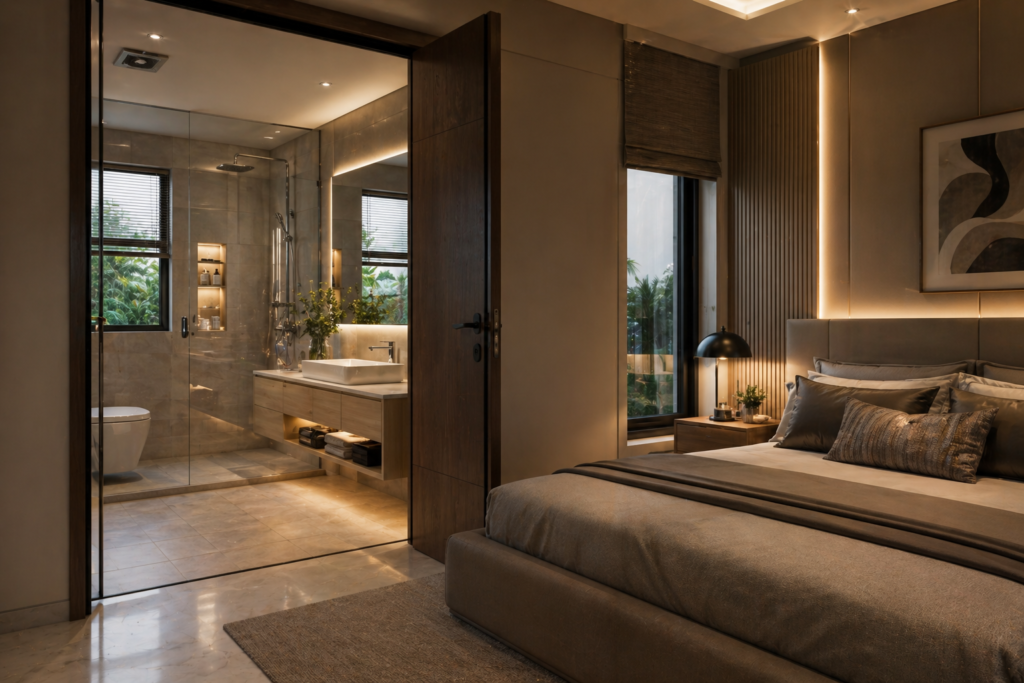
In today’s India, the bathroom has evolved far beyond its original purpose. It is no longer a separate utility but an integrated part of the home, often directly connected to the bedroom. This shift represents the highest level of privacy and convenience, where personal space is designed with intention and care.
Modern bathrooms are built with attention to layout, lighting, ventilation, and materials. They are designed not only to function efficiently but also to enhance daily routines. The presence of an attached bathroom has become a standard expectation, reflecting both lifestyle aspirations and practical needs. What was once distant and detached is now central and essential.
Design now follows structured guidelines influenced by frameworks like the National Building Code of India, ensuring proper ventilation, lighting, and layout planning.
The Present Reality – When Function Meets Experience
The modern bathroom is a reflection of how far living standards have advanced. It is no longer just about fulfilling a basic need but about creating a space that supports hygiene, comfort, and well-being. Design has taken center stage, and every element, from tiles to fixtures, contributes to a better experience.
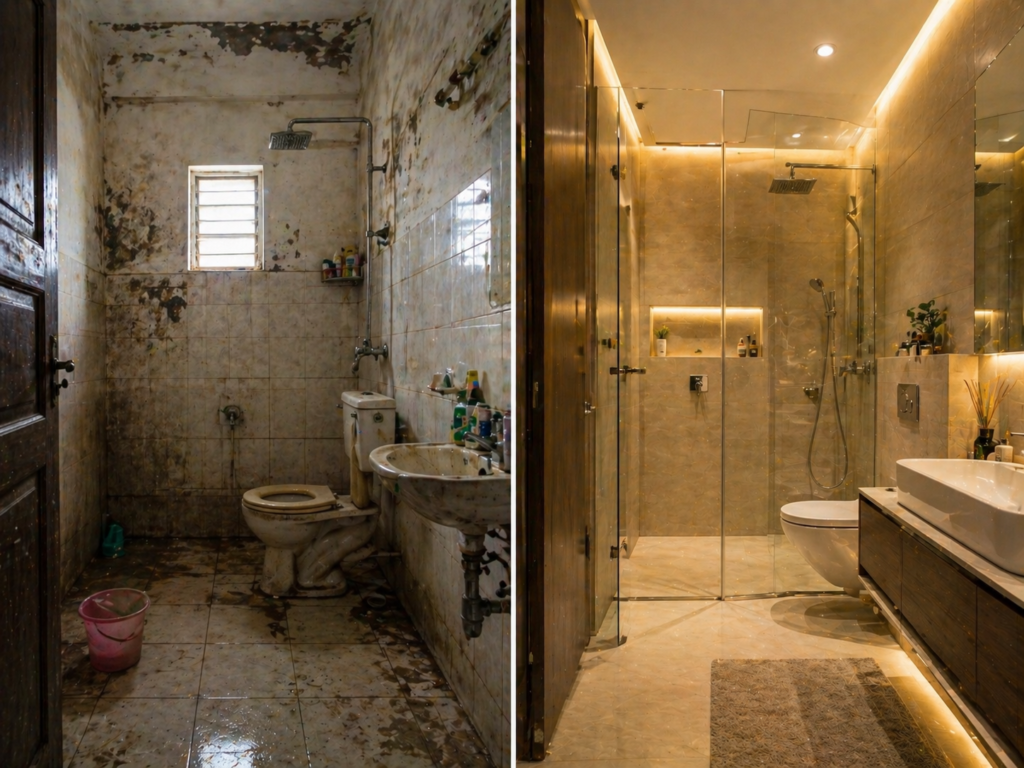
Yet, many homes still carry remnants of the past. Outdated layouts, poor ventilation, and inefficient use of space continue to exist in older bathrooms. These spaces no longer align with the expectations of modern living. They interrupt routines instead of supporting them.
This is where the next phase of evolution begins, not through construction alone, but through renovation.
The Need for Bathroom Renovation in Modern India
A bathroom that does not meet current standards is more than an inconvenience; it is a limitation. Renovation is no longer a luxury reserved for premium homes. It is a necessary step toward improving daily life.
Upgrading a bathroom brings immediate benefits. It enhances hygiene, improves functionality, and increases the overall value of the home. It also ensures better water management and long-term durability. More importantly, it transforms how a space feels and performs every single day.
A well-designed bathroom does not demand attention; it quietly supports a better lifestyle.
Stop Adjusting. Start Upgrading.
If your bathroom still reflects a time when design and functionality were secondary, then it is time to move forward. Living with outdated spaces is not practicality; it is compromise.
A professionally renovated bathroom brings clarity to chaos. It replaces inefficiency with structure and discomfort with ease. Every detail is planned, every element aligned, and every corner optimized for modern living.
The transition from past to present does not have to be gradual anymore. It can begin with a single decision.
Book your bathroom transformation today with reno bath
The Future – Where Bathrooms Continue to Evolve
The evolution of bathrooms is far from complete. The future is already taking shape through smarter technologies, sustainable materials, and more efficient designs. Bathrooms are becoming more intuitive, more environmentally responsible, and more aligned with modern lifestyles.
What started as a basic necessity has now become a space of innovation. The direction is clear. Bathrooms will continue to evolve, just as the homes they belong to.
Conclusion – A Journey That Redefined Living
From village outskirts to bedroom interiors, the bathroom has traveled a long and meaningful path. It has moved through phases of necessity, resistance, acceptance, and finally, transformation. Each stage reflects a deeper change in how people live, think, and prioritize their environment.
The journey is not just about where the bathroom is located. It is about what it represents today. Privacy, hygiene, dignity, and modern living standards are now built into a space that was once overlooked.
The next step in this journey belongs to the present. It belongs to those who choose not to live with outdated spaces but to transform them.
Because progress does not wait. And neither should your bathroom.
Visit: www.reno-bath.com
2 Comments